Coalition shoots down seven Houthi projectiles near Saudi oil fields
Three missiles targeted the Eastern Province while four drones aimed for the south during talks in Tehran.
By David Almasi ·
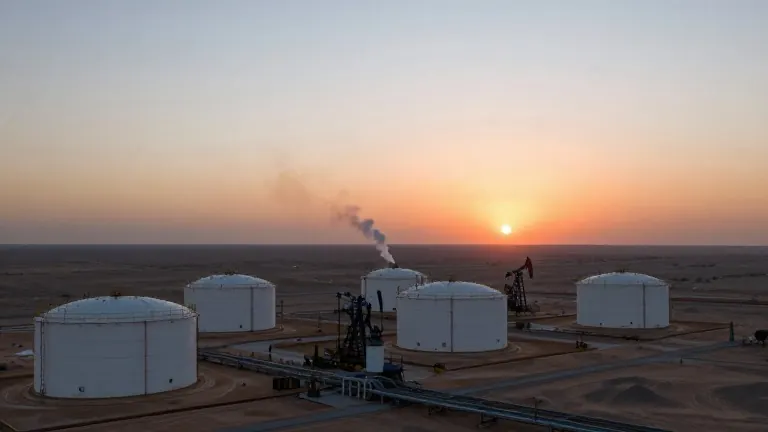
The Saudi-led coalition intercepted three ballistic missiles and four drones launched by Yemen's Houthis on Tuesday. Colonel Turki al-Maliki, the coalition's spokesperson, stated that the three missiles were targeted at the kingdom's Eastern Province. He confirmed that the intercepts caused no casualties. The four drones were heading toward the southern regions of Saudi Arabia.
Prior to the interception, the Saudi civil defense agency issued emergency alerts in the Eastern Province and Al Kharj Governorate. After lifting the alerts, the agency advised residents to avoid crowds and refrain from filming. They instructed the public to call 911 in the event of an emergency. The Houthis did not issue an immediate response to the strikes.
These interceptions followed a previous wave of attacks on Monday evening. The coalition reported destroying three additional drones over the Riyadh and southern regions. The recent escalation coincides with high-level diplomatic meetings in Tehran. Senior officials from Saudi Arabia, Turkey, and Pakistan met with their Iranian counterparts to address the regional conflict. The war began when the United States and Israel launched a campaign against Iran in February, which reignited fighting in Yemen.
Saudi Arabia described the Tehran visit as an effort to open negotiating channels to prevent military escalation. Defense Minister Prince Khalid bin Salman represented the kingdom at the talks. He is the younger brother of Crown Prince Mohammed bin Salman. Pakistan sent Field Marshal Asim Munir, its army chief, while Turkey dispatched Ibrahim Kalin, its intelligence chief. Iranian state media showed President Masoud Pezeshkian, Foreign Minister Abbas Araqchi, and Mohsen Rezaei, the secretary of the Supreme National Security Council, attending the sessions.
A joint statement from the four countries was issued late Monday. The document said the nations agreed to continue dialogue to strengthen cooperation for regional peace and security. Pakistan and Qatar have led mediation efforts between the US and Iran, which resulted in an interim peace agreement in June. Fighting resumed shortly after that agreement, leading to new clashes between the Houthis and Saudi forces.
The Houthis seized strategic areas along Yemen's Red Sea coast from Saudi-backed government forces in a lightning offensive last month. This move prompted a Saudi counteroffensive. The kingdom has since increased its strikes on the group. Houthi forces have also targeted Saudi airports, ports, and oil facilities. An attack on King Khalid International Airport in Riyadh this month killed at least 13 people and wounded more than 300. The coalition also launched retaliatory strikes, destroying five missile storage tunnels, four launchers, and a missile depot.
Earlier on Monday, the Houthis claimed attacks on Riyadh airport and crude oil pumping stations in western and eastern Saudi Arabia. The coalition said it intercepted those missiles. The wider war has restricted shipping through the Strait of Hormuz and driven up oil and gasoline prices. Egypt, a key partner for Saudi Arabia, authorized its military to help defend the kingdom on Monday.