Siege of Taiz: Yemeni City Faces Severe Water Crisis
Houthi forces have tightened their grip on Taiz, leaving over one million residents with drastically reduced access to drinking water and essential supplies.
By Layla Fontaine ·
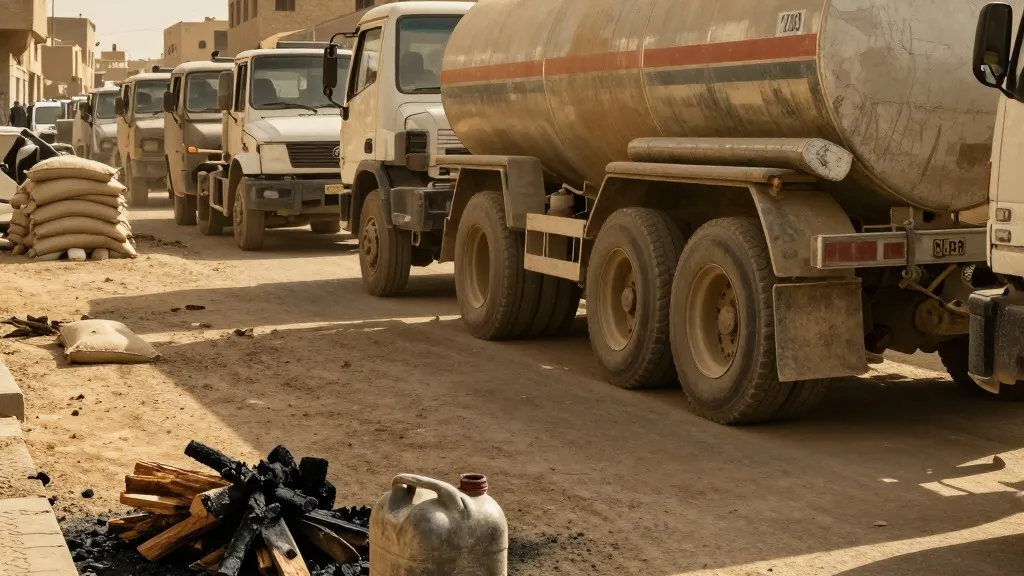
Humanitarian organizations report that drinking water in Taiz has reached crisis levels in recent weeks. The Iran-backed Houthi rebels have intensified their siege of the country's third-largest city. This move comes as their conflict with government forces escalates. Aid groups state that the needs of more than one million residents are barely being met. Access to wells is now restricted, and water trucks face significant blocks from entering the city.
Local families are stretching every drop of water they have. Hadil al-Shahid, who lives with two young children, previously used about 10 liters of bottled water daily. That same amount now lasts her family roughly four days. She stopped drinking coffee and tea to conserve supply. Bottled water prices have risen by as much as 75 percent in just a few weeks. Some households are now purchasing water on credit to survive.
The siege impacts more than just water availability. Grocery shortages have driven up food prices, while scarce fuel hampers hospitals and sanitation services. Amnesty International has urged the Houthis to open roads into the city immediately. The group warns that Taiz is approaching the brink of a severe humanitarian disaster. The city has become a focal point of fighting since the civil war began in 2014, when the Houthis took the north and forced the government into exile.
By August, Yemen became a widening front in the broader Iran conflict. The Houthis advanced on Taiz last month after capturing the port city of Mokha. This strategic move controls vital Red Sea shipping routes. As rebels took more land, residents lost access to nearby wells. Truckers making dangerous trips have tripled their rates. Meanwhile, water utilities and desalination plants operate below capacity due to fuel shortages.
Taiz province has absorbed an estimated 124,000 displaced people since August. United Nations migration experts note that many live in makeshift shelters and survive on one meal a day. Cooking gas prices have more than quadrupled, forcing some families to burn wood or charcoal. Fuel shortages have also shut down waste collection and community kitchens. Jens Laerke of the UN emergency aid division warned that these shortages feed into each other, increasing the risk of diseases like cholera.
Displaced resident Ahmed Abdel Gaber said his income from hauling construction material has become unstable. He and his nine relatives shelter in the ruins of a building and rely on donations for food. Al-Shahid, who owns a hair salon, had to close her business as customers prioritized food and water. Her children now eat mostly rice, bread, and cheese. The government still holds the city center, but resupplying forces is complicated by stiff resistance in the surrounding hills.
Civilians face daily dangers from the ongoing conflict. Houthi missiles hit a residential area earlier this week, killing two teenage girls. Abdel Gaber hears explosions daily from fighting about five kilometers away. Al-Shahid says she cannot afford to leave. She stated that staying in their home is inevitable, whether it be a matter of life or death.