Tesla Ends Seven-Year Cybertruck Wait for Australian and New Zealand Customers
The electric automaker has voided thousands of reservations and refunded deposits, effectively abandoning the right-hand-drive markets for its stainless steel pickup.
By Carmen Wojcik ·
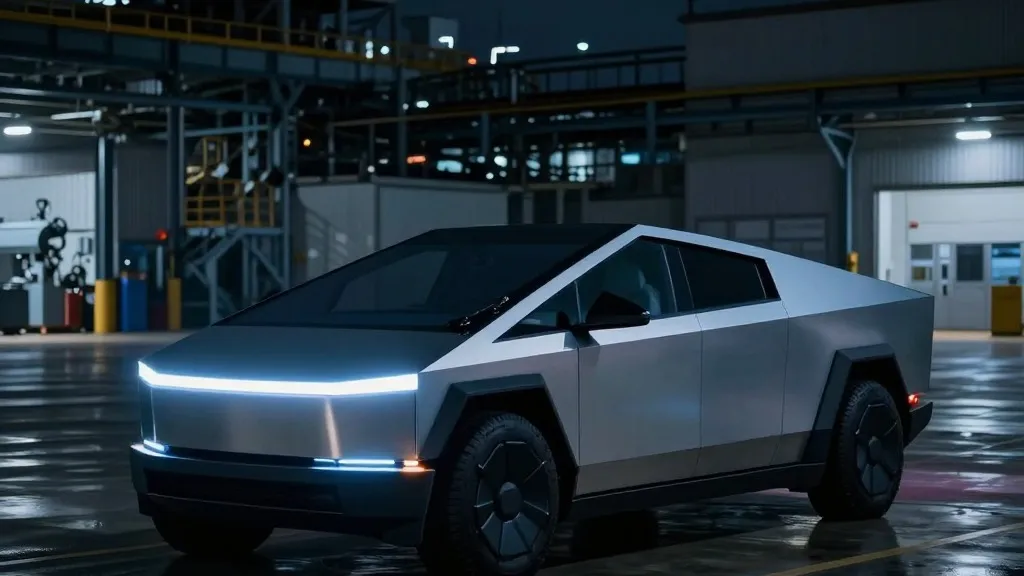
A$150. That was the price Australian and New Zealand enthusiasts paid in November 2019 to secure their place in line for a vehicle that would take nearly seven years to arrive, if it arrived at all. As of this morning, that fee is being returned in full, marking the official end of the Cybertruck’s presence in the region. Tesla has sent emails to reservation holders confirming that plans to produce the electric pickup for these markets have been discontinued, voiding their orders and initiating refund processes that will conclude within 30 days.
The decision comes on the heels of Tesla’s Q3 2026 earnings report, released just one day prior to the customer notifications. The financials underscore a shifting landscape for the company’s most unconventional vehicle. In the third quarter of this year, Tesla delivered only 8,295 units categorized as “Other Models,” a segment that now almost exclusively comprises Cybertrucks following the cessation of Model S and Model X production. Estimates place actual Cybertruck sales for the quarter between 7,000 and 8,000 units, translating to an annual pace of roughly 30,000 vehicles. This figure stands in stark contrast to the production line’s capacity of 250,000 units per year, a gap that makes the cost of re-engineering the truck for new markets difficult to justify.
For years, Australia represented a significant portion of the Cybertruck’s global interest. By 2023, crowdsourced tracking suggested that total reservations had reached approximately 2 million worldwide. Within that pool, Australia consistently ranked as the third-largest market, trailing only the United States and Canada, with about 3% of all reservations. Despite this demand, the vehicle’s design created a logistical hurdle: the Cybertruck is built exclusively in left-hand drive. Australia, New Zealand, and other key markets require right-hand drive configurations, a modification that necessitates extensive certification under local design rules. Tesla quietly closed the Australian reservation page in May 2022, replacing it with a simple “Get updates” button, leaving thousands of customers in limbo for four more years without a formal refund or cancellation notice.
The wait was punctuated by high-profile moments that only heightened expectations. In 2024, Tesla shipped a Cybertruck to Australia for a display tour, and CEO Elon Musk told shareholders that certification for other markets might occur “sometime next year.” That year has come and gone without a right-hand-drive version materializing. The company has since expanded its international footprint in left-hand-drive markets, beginning deliveries in South Korea late last year and the UAE in January, with configurators now active in Saudi Arabia, Qatar, Jordan, and Israel. However, the truck remains blocked in the European Union primarily due to pedestrian safety regulations, further narrowing its global appeal.
To soften the blow for those losing their reservations, Tesla is offering a free one-year subscription to its Full Self-Driving (Supervised) software. This incentive is available to customers who pivot their purchase to a Model 3 or Model Y, vehicles that Tesla already produces in right-hand drive configurations. The move appears designed to convert dead reservations into sales of cars the company can currently ship efficiently.
The cancellation confirms that the Cybertruck is evolving into a niche product, primarily serving the American market. With US sales declining from approximately 39,000 units in 2024 to a fraction of that figure today, and the current model commanding a higher price with less range than originally promised, the value proposition for an imported, re-engineered version in Australia and New Zealand was becoming increasingly tenuous. For the thousands of Australians and New Zealanders who held their breath for nearly a decade, the wait is finally over, ending with a refund and a pivot to more conventional electric sedans.
More Business · Business Watchdog · Report a business · Got a Story?