Tesla’s Cybercab Arrival: A Year-End Deadline That May Not Mean Private Ownership
While Tesla promises customer deliveries of its steering-wheel-less robotaxi by December 2026, executives clarify that most units will remain in company-owned fleets rather than private garages.
By David Almasi ·
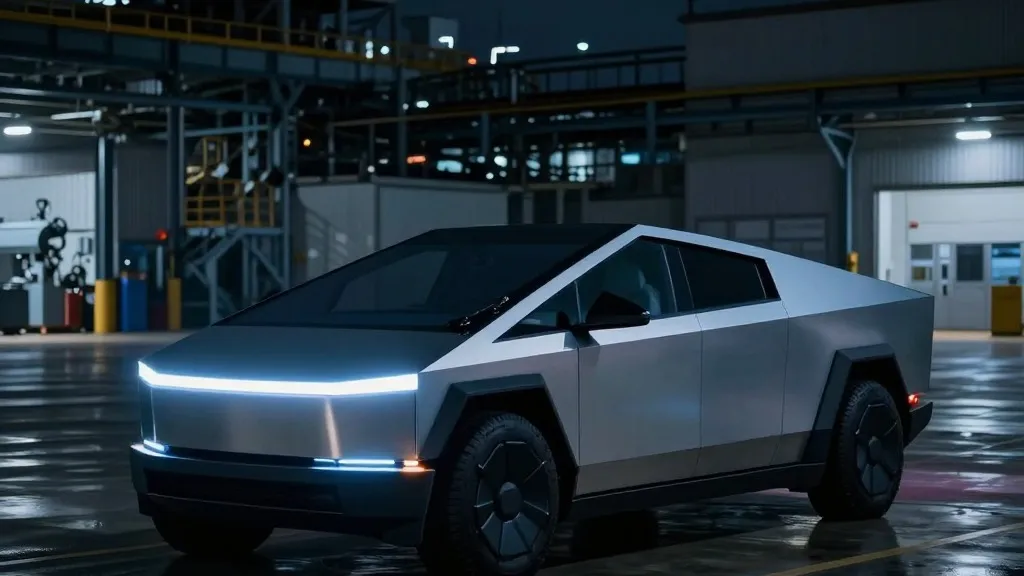
The long-standing ambiguity surrounding the Tesla Cybercab’s commercial availability has finally been resolved, though the resolution complicates the narrative for prospective buyers. On October 21, during the company’s third-quarter 2026 earnings call, Tesla leadership provided a definitive timeline for when the purpose-built autonomous vehicle will reach the hands of customers. However, the details suggest that the path to private ownership is narrower than many enthusiasts had anticipated, creating a tension between the promise of a near-term release and the reality of a service-first strategy.
Lars Moravy, Tesla’s Vice President of Engineering, stated that the company is targeting the end of 2026 to begin delivering Cybercab units to external customers. He confirmed that production is actively underway at the Gigafactory in Texas. Yet, Moravy clarified that currently, every unit rolling off the line is being diverted to Tesla’s internal Robotaxi fleet. This means that while the manufacturing infrastructure is operational, the initial wave of vehicles is not intended for private sale but for integration into the company's own ride-hailing service.
The distinction between fleet deployment and customer delivery is central to understanding the current status of the vehicle. Moravy explained that as operations scale, Tesla intends to mainly deliver fully designed autonomous vehicles to customers, with the Cybercab serving as the first model in this category. He noted that these initial customer deliveries will start on a small scale. This measured approach allows the company to gain necessary experience in delivery logistics, ownership models, and fleet management, particularly regarding the operation of autonomous vehicles outside of Tesla’s direct control.
CEO Elon Musk reinforced the idea that private sales will be limited in the early stages. During the same call, Musk described the Cybercab primarily as a "transport-as-a-service" offering rather than a traditional personal vehicle like the Model 3, Model Y, or the upcoming Roadster. He emphasized that the "vast majority" of Cybercab units will remain Tesla-owned. This positioning challenges the assumption that the Cybercab will function as a mass-market consumer product similar to Tesla’s existing lineup.
The Cybercab itself represents a significant departure from conventional automotive design, featuring a two-seater configuration without a steering wheel or pedals. The vehicle relies entirely on Tesla’s Full Self-Driving software suite. Production of the model began in February of this year, and early units have been integrated into Tesla’s Robotaxi service since early September, when the company officially launched public rides. Tesla had previously indicated an aim to price the Cybercab at approximately $30,000, a figure that remains relevant as the vehicle transitions from internal testing to broader availability.
Despite the optimistic timeline for customer deliveries, significant technical and regulatory hurdles remain. Ashok Elluswamy, Tesla’s Head of AI, indicated that unsupervised Full Self-Driving is expected to ship to consumer cars during the second quarter of 2027. This creates a potential gap between the Cybercab’s release and the broader availability of unsupervised autonomy in other models. Furthermore, early buyers or fleet operators may face vehicles whose autonomous capabilities are geographically restricted, a constraint driven by the pace of regulatory agencies rather than just technological readiness.
The shift in terminology from "consumers" to "customers" in official communications also reflects the nuanced nature of the launch. While the vehicle is being built for people to use, the primary value proposition is currently service-oriented. The company is effectively testing the waters of autonomous ownership, starting with a controlled rollout to manage the complexities of maintaining and operating vehicles that drive themselves without human intervention.
As the year draws to a close, the focus will shift from production metrics to the logistics of the first external deliveries. Stakeholders will be watching to see how Tesla balances the needs of its internal Robotaxi fleet with the demands of the first private Cybercab owners. The success of this initial phase will likely determine the pace at which the vehicle expands beyond its limited early availability.
In the coming weeks, further details regarding the specific regions where the Cybercab will be available and the exact terms of the "transport-as-a-service" model are expected to emerge. For now, the year-end 2026 deadline serves as a concrete milestone, ending months of speculation and providing a clear target for the company’s most ambitious autonomous vehicle to date.