Governor races split 18 to 18 as voters decide state control
With 19 seats open and nine battlegrounds, the 2026 midterm election tests Republican state dominance and Democratic hopes for a historic majority.
By David Almasi ·
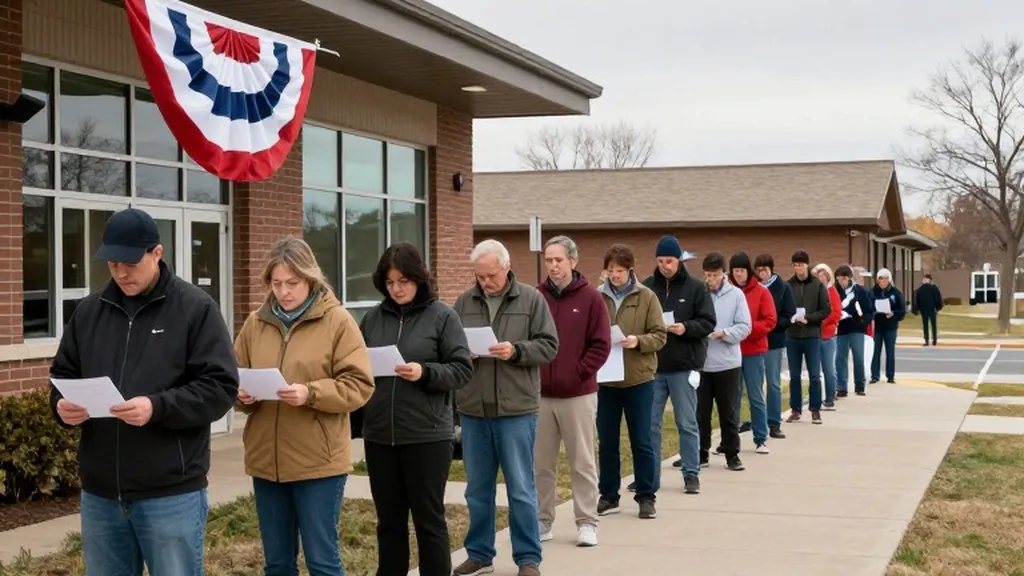
Election Day has arrived with the nation divided on the state level, as voters in 36 states prepare to decide the next governors. Republicans currently hold 26 governorships and Democrats hold 24, but among the specific offices on the ballot today, the split is perfectly even at 18 to 18. This parity sets the stage for a critical contest over state control, where every vote counts toward determining which party leads the executive branch in the majority of states.
The landscape of this election is defined by a significant number of open seats. Nineteen of the 36 governor races have no incumbent on the ballot, creating a fluid environment for challengers to make their case. Fifteen of these seats are open because the sitting governors are term limited. In three other cases, the sitting governors chose not to run again. Kim Reynolds of Iowa, Tim Walz of Minnesota, and Tony Evers of Wisconsin all stepped aside, leaving their parties to select new candidates. Additionally, Daniel McKee of Rhode Island lost his primary, adding another open seat to the map.
Nine specific races are identified as battlegrounds by Ballotpedia: Alaska, Arizona, Georgia, Iowa, Kansas, Michigan, Nevada, Ohio, and Wisconsin. In these states, the outcome will likely determine the overall balance of power. Democrats are defending five governorships in states that President Donald Trump won in 2024. These include Katie Hobbs in Arizona, Josh Shapiro in Pennsylvania, and the open seats in Kansas and Wisconsin. Conversely, Republicans are defending two seats in states that Vice President Kamala Harris won, with Kelly Ayotte in New Hampshire and Phil Scott in Vermont.
In Georgia, Republican health care executive Rick Jackson faces Democratic former Atlanta Mayor Keisha Lance Bottoms. Jackson is running to succeed Brian Kemp, who is term limited. This race is closely watched because Georgia is a key state in the broader fight for congressional control. In Nevada, Republican Governor Joe Lombardo is challenging for re-election against Democratic Attorney General Aaron Ford. Economic strain and tariffs have made states like Nevada and Maine competitive, suggesting that financial concerns are central to voter decision making.
Ohio presents a high profile matchup featuring Republican Vivek Ramaswamy against Democrat Amy Acton. The race in Ohio has been marked by controversy, with Ramaswamy's campaign facing backlash over an ad featuring Acton's estranged mother. Despite the noise, the state remains a pivotal location for both parties. In Iowa, the race is particularly fluid due to the departure of incumbent Kim Reynolds. The state voted strongly for Trump in 2024, but the governor race is considered competitive, adding to the uncertainty in a traditionally Republican-leaning state.
The stakes for the governor races are high for both parties. Republicans have held a nationwide majority of governorships since 2010. Democrats would need a net gain of two governorships to achieve a majority, a feat they have not accomplished in two decades. Many Democratic strategists view this election as an opportunity to reverse that trend. If Democrats can hold their seats in Pennsylvania, Arizona, and Wisconsin while winning in open states, they could secure the most state executive power they have seen in twenty years.
Voters are going to the polls with a mix of optimism and anxiety. The Associated Press describes the election as a referendum on Trump's second term, with many voters struggling with high prices. AP-NORC polling indicates that 35% of U.S. Adults approve of Trump's job performance, while only 25% approve of his handling of the economy. About 7 in 10 voters say the country is heading in the wrong direction. These figures suggest that economic frustration is a driving force behind voter turnout and choice in the governor races.
Republican leaders are bracing for the possibility of losing the House but are fighting to hold the Senate and the governorships. RNC Chairman Joe Gruters emphasized that everything depends on turnout. He stated that if they can turn out their voters, they win. This sentiment is echoed in conservative strongholds where early voting has already surpassed levels from four years ago. More than 57 million people had already voted as of Monday, indicating high engagement among early voters in closely watched states.
Democrats are described as cautiously optimistic, hoping to capitalize on voter anger over the cost of living. DCCC Chair Rep. Suzan DelBene said the American people are angry and want change. This mood is palpable in places like North Carolina, where voter James Moore noted that he is paying more for taxes and healthcare. In contrast, voter Mark Barker in Florida expressed support for the administration, stating he believes Trump is doing an awesome job. These divergent views highlight the deep cultural and economic divides that are shaping the 2026 midterm election.
The administration has been actively involved in the election process, with President Trump holding dozens of rallies. He ended his schedule on Sunday in Salina, Kansas, where he urged voters to pretend he was on the ballot. His presence has energized some Republican candidates, though many have kept a degree of distance to avoid association with any potential controversies. The administration has also filed lawsuits in states like Alaska and California regarding voting certification, adding a layer of legal complexity to the election day proceedings.
As polls open across the country, the focus remains on the 36 governor races that could shift the balance of power. The 18 to 18 split means that even a small shift in voter preference in the nine battleground states could change the outcome. With 19 open seats, the lack of incumbents provides an opening for challengers to define the terms of the debate. The results will determine who controls the state governments for the next four years and set the tone for the final two years of President Trump's term.