Tirana Protesters Injure 300 in Clashes with Albanian Police
Police used water cannons and tear gas on Saturday to break up a rally that escalated after months of unrest over living costs and school conditions.
By David Almasi ·
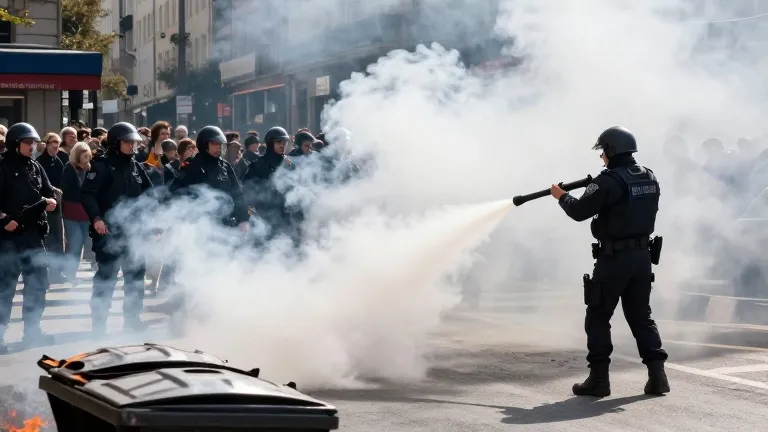
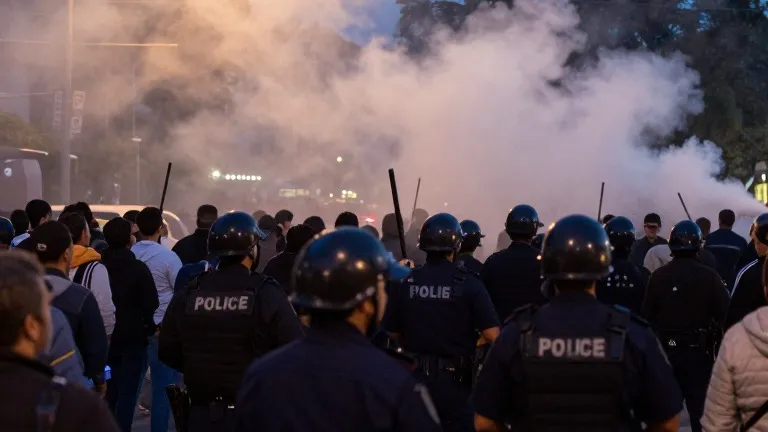
More than 300 people were injured when police in Albania’s capital used water cannons, tear gas, and rubber bullets to disperse a large crowd on Saturday. Authorities confirmed that the casualties included both demonstrators and officers. Dozens of protesters were also arrested during the confrontation.
The violence marked a sharp increase in tension after a period of relative calm in recent days. Organizers called for students and residents from across the country to gather in Tirana. Thousands responded to the summons, joining a rally that had been planned with support from university professors, artists, and opposition parties.
Local media reported that police increased security measures before the event. Officers conducted checks on vehicles entering the city. The Ministry of Education served as a primary target for the demonstrators. Several government buildings were attacked during the chaos. Protesters threw stones at the education ministry and rolled burning waste bins toward the structure.
The current wave of unrest began in mid-October. Initial complaints focused on poor conditions in schools and the rising cost of living. These grievances have expanded into a wider campaign against corruption. Public anger has been building since May, when news surfaced regarding a luxury hotel project linked to the family of U.S. President Donald Trump.
Prime Minister Edi Rama, a Socialist, has blamed foreign actors for the recent violence. He accused Russia and Iran of driving online misinformation campaigns. Rama has also called for dialogue with the opposition. On Saturday, red cushions were placed outside the government headquarters as a symbolic invitation to talk. Protesters set the cushions on fire shortly after their placement.
Demonstrators have directed blame at the entire political class. Signs in the crowd criticized Rama’s center-right rival, Sali Berisha. The protests represent a sustained push for Rama’s resignation. Clashes between police and demonstrators have occurred repeatedly since the mid-October start of the current wave.