Tesla Pivots to In-House Mapping After Years of Dismissing the Tech
The automaker's leadership is now constructing a proprietary navigation layer to address persistent failures in its autonomous driving software.
By Layla Fontaine ·
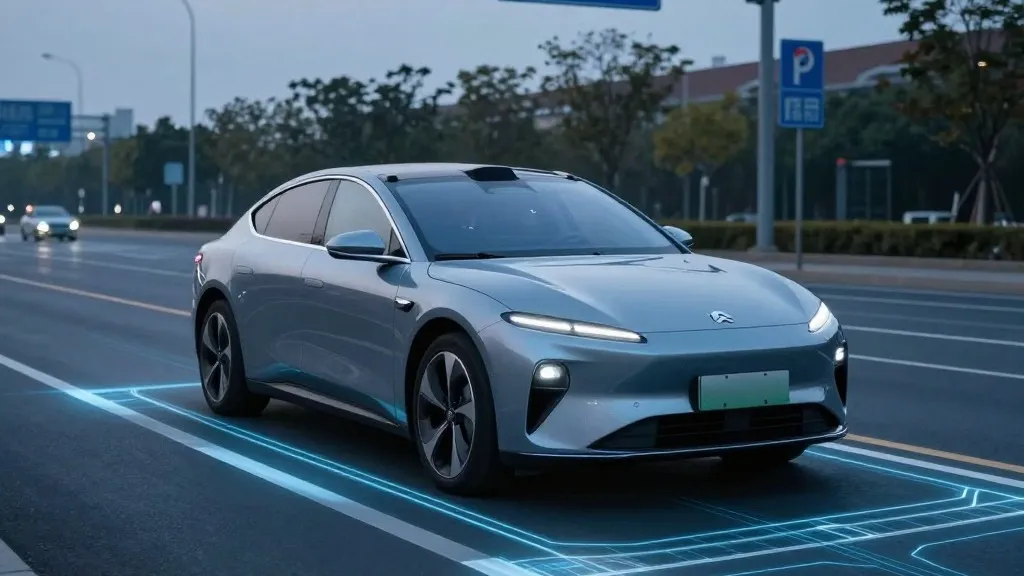
Tesla is reversing course on a decade of autonomy strategy, announcing plans to build its own proprietary maps to correct persistent failures in its Full Self-Driving system. The company's head of AI confirmed the shift during the Q3 2026 earnings call, marking a significant departure from long-held arguments that detailed mapping represents a brittle solution to the challenge of self-driving. This pivot suggests that the automaker's vision-based approach is encountering hard limits regarding environmental awareness, specifically in reading signage and managing parking maneuvers.
The request came directly from the shareholder Q&A, where a retail investor asked why the company continues to rely on third-party data for navigation. Ashok Elluswamy, Tesla's VP of AI, responded by stating that the company should not be dependent on external map providers. He described a new AI-based architecture that will utilize data collected by the fleet to build a map layer capable of learning individual driver preferences and responding to voice commands. This system is slated to begin handling trip starts and ends with the release of FSD v15, with full navigation and parking support to follow over subsequent months.
This development stands in stark contrast to the company's historical stance on mapping technology. In 2015, Tesla told Fortune it was building high-precision maps for Autopilot, but the philosophy shifted drastically by 2019. At Autonomy Day, Elon Musk stated that attempting to build high-precision lane maps was a huge mistake, labeling reliance on such data a bad idea that renders a system extremely brittle. That presentation also included Musk calling lidar a fool's errand, reinforcing the narrative that Tesla would solve driving through cameras and AI alone, without the need for detailed environmental data.
Despite the previous rhetoric, the company is now moving to construct a map layer from its own fleet to address specific failures in its vision system. The problems cited by investors, specifically regarding speed limits, parking, and route selection, all relate to understanding the physical environment. Recent incidents underscore these difficulties; a Belgian road safety group found that FSD vehicles exceeded speed limits in 55% of 30 km/h zones tested in Brussels, and US regulators are weighing an investigation into claims of speeding through school zones. If the system cannot reliably apply a simple speed limit sign, a map layer is being introduced to compensate.
This strategic shift aligns Tesla's methodology more closely with its primary rival, Waymo. Waymo maps cities using sensor-equipped vehicles to ensure safe operation within specific areas before launching service, and maintains those maps as the fleet drives. Tesla is now describing a similar process where its vehicles collectively contribute to a shared map to improve driving performance. The primary difference remains that Waymo vehicles carry lidar sensors to generate their data, whereas Tesla is attempting to achieve similar results through its camera-equipped fleet.
The implementation of this map layer coincides with the operational reality of Tesla's Robotaxi service, which currently runs city by city within small geofenced service areas. While the company has not specified that it is creating centimeter-level high-definition maps, a map layer generated by the fleet could eventually evolve into that level of detail. This approach contradicts previous statements regarding unsupervised driving in consumer vehicles, as the timeline for pushing unsupervised FSD to customer cars has been moved to Q2 2027, with the technology remaining exclusive to the Robotaxi fleet for now.
There is no inherent issue with using maps, as every serious self-driving program relies on them to some degree. A map built from millions of vehicles could theoretically offer a significant advantage if it resolves the identified speed limit problems. However, the shift highlights a contradiction in previous messaging that dismissed mapping as a crutch for competitors while Tesla's system would operate on vision alone. As the company builds its own map infrastructure and operates within geofenced areas, the operational methods of Tesla and Waymo appear increasingly similar.