New Plan Requires AI Data Centers to Share Energy Costs with Neighbors
Federal leadership is pushing for data center operators to return excess power or financial compensation to local residents to mitigate rising utility bills and community concerns.
By Layla Fontaine ·
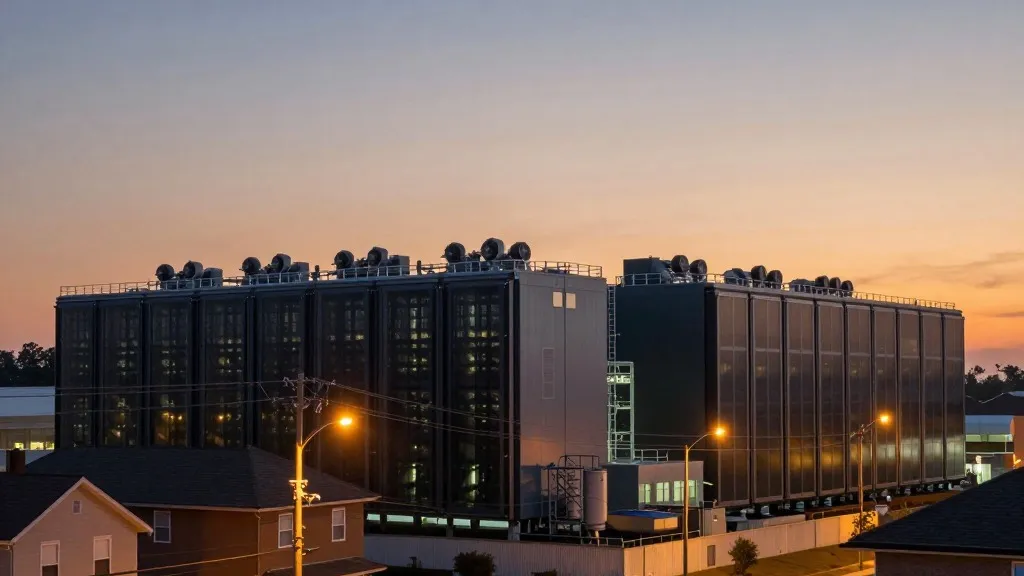
Residents living near large-scale artificial intelligence infrastructure may soon see a shift in how their energy costs are managed. Following recent federal directives, operators of massive data centers are being encouraged to return a portion of their energy resources or financial value to the surrounding communities. This move is designed to offset the rising electricity bills that often accompany the construction of these energy-intensive facilities, potentially stabilizing or even lowering utility rates for local households.
The primary driver behind this initiative is a direct response to growing public resistance against the expansion of AI data centers. In various towns across the United States, local populations have organized protests to highlight the tangible burdens placed on their neighborhoods. These concerns include not only higher energy prices but also significant noise pollution, increased demand for water resources, and visible environmental changes such as air quality degradation and deforestation. The federal approach aims to address the economic friction that has made these projects a source of tension between large technology firms and the communities they inhabit.
The administration’s strategy is rooted in a broader national objective to maintain a competitive edge in the global artificial intelligence race against China. By facilitating a financial or energy-based exchange with local residents, the government hopes to make the presence of data centers more palatable and secure the social license needed for rapid expansion. The specific mechanism suggested is that data centers, which have already been ordered to generate their own electricity, should provide any surplus power back to the local grid. This excess energy could be sold to or given to the community, directly alleviating the financial strain on residents who are currently bearing the cost of increased grid demand.
This energy-sharing proposal complements a recently passed legislative act that mandates data center operators to cover the costs of necessary grid upgrades. Previously, these infrastructure improvements were often funded through local tax revenues, placing an indirect financial burden on the community. By combining this new energy dividend concept with the grid upgrade mandate, the administration is attempting to create a comprehensive package that addresses both the direct utility costs and the underlying infrastructure expenses associated with hosting large-scale computing facilities.
President Donald Trump emphasized the practical benefits of this approach in a recent post on Truth Social, suggesting that financial arrangements can significantly improve the public reception of data center projects. He noted that facilities which were previously unpopular in specific areas have become widely accepted once a clear financial deal was established. The President concluded his statement with a directive to stakeholders: "MAKE DEALS, and get them built!!!" This sentiment reflects a preference for voluntary, market-driven solutions that accelerate construction timelines while addressing community grievances.
Despite the optimistic framing, the long-term success of this mandate remains uncertain. While the economic aspect is a critical component of community relations, it is only one facet of a complex issue. Significant challenges persist that are not easily solved by financial compensation or energy sharing. Enormous water consumption, ongoing ecological damage, and persistent pollution remain major hurdles that make the approval of AI data centers a difficult process in many locations. The proposal addresses the most visible pain point, the rising cost of living, but leaves other environmental impacts to be negotiated separately.
For ordinary residents, the immediate implication is a potential reduction in the financial shock often associated with new data center construction. If operators are required or strongly incentivized to sell or give back excess energy, local households could see a direct benefit in their monthly utility statements. This approach aims to transform the data center from a purely extractive entity into one that provides a tangible return on the resources it consumes, thereby fostering a more cooperative relationship between technology developers and the public.