Musk Cuts Lunar Fuel Estimate To Eight
SpaceX chief rejects a NASA panel's 22-flight refueling plan for the 2028 Artemis IV mission, citing hardware improvements.
By Carmen Wojcik ·
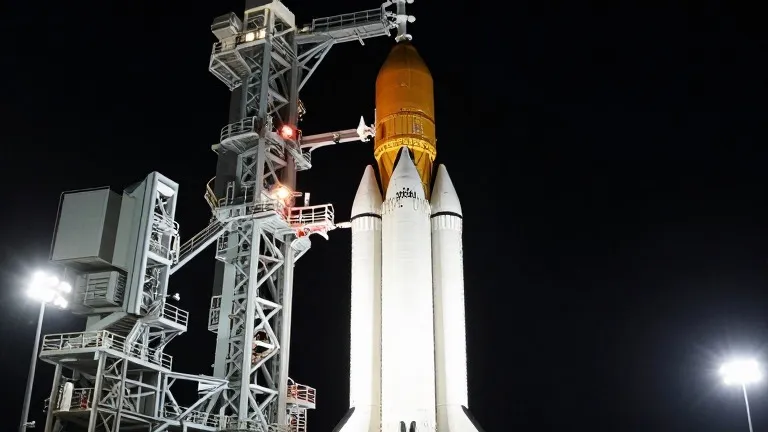
Elon Musk stated on Thursday that six to eight fuel tanker launches will suffice to land astronauts on the Moon by 2028. This figure stands in sharp contrast to the 22 flights cited by a federal safety advisory group earlier in the day.
The disagreement surfaced during the quarterly meeting of the Aerospace Safety Advisory Panel. Charlie Precourt, a former NASA astronaut serving on the panel, identified the refueling of the lunar lander as a primary risk for the Artemis IV mission. He noted that the previous estimate required approximately 22 separate launches to fill the orbital depot.
Ars Technica reporter Eric Berger shared Precourt's comments on X. Musk responded directly to the post, calling the 22-flight figure "way too high." He argued that the actual requirement will be much lower, specifically in the range of six to eight tankers.
The discrepancy arises from differences in projected vehicle performance. Starship uses nearly all its propellant to reach Earth orbit, necessitating an in-space fueling station. Tankers must launch, dock with a storage depot, and transfer fuel before the crewed lander can depart. NASA's current estimate relies on the lifting capacity of the current Starship model. Musk's lower estimate assumes the upgraded V3 version, which will be used for the actual refueling operations.
Logistics present a timeline challenge. If SpaceX achieves a rate of two launches per week by late 2027, filling a depot at the panel's 22-flight standard would consume roughly three months. Each additional launch adds time and cost, as well as potential points of failure before the crew launches. Fuel losses occur as liquid propellant boils off in orbit, further complicating the math.
Musk has previously disputed higher launch counts. In 2021, he described a 16-launch estimate from a government document as "extremely unlikely," predicting eight tankers would be the maximum needed. Precourt acknowledged that Artemis IV involves "a large number of firsts" but praised NASA Administrator Jared Isaacman's team for working to clear obstacles for both SpaceX and Blue Origin.
The next step involves SpaceX executing its planned V3 Starship flights to test orbital refueling. The final number of tankers required will depend on how much propellant each flight successfully delivers to the depot before the 2028 crewed mission begins.