Hong Kong judge adds 10 years to Joshua Wong's prison term
The activist's sentence extends his incarceration to nearly six years total, prompting criticism from civil rights groups and a statement from Wong that he acted within the law.
By Layla Fontaine ·
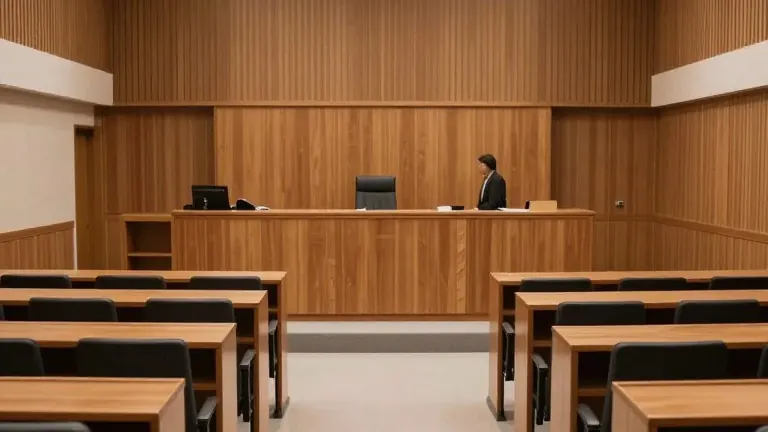
Judge William Tam sentenced prominent Hong Kong activist Joshua Wong to an additional 10 years in prison on Thursday. The ruling came under a national security law imposed by Beijing. Critics argue the decision reflects an ongoing crackdown on the city's pro-democracy movement.
Wong had pleaded guilty earlier this year to conspiracy to collude with foreign forces to endanger national security. Prosecutors charged him with the offense in 2025. Before this latest prosecution, officials expected to release Wong in January 2027.
Judge Tam declared Wong a mastermind in the conspiracy. The judge stated that Wong and fellow activist Nathan Law conspired to maintain direct contact with foreign officials. They sought to trigger adverse interference against China and Hong Kong.
The court pointed to the United States revoking Hong Kong's special treatment and imposing sanctions on Chinese and Hong Kong officials. Judge Tam identified these actions as the specific hostile measures Wong and Law had called for. He wrote that the punishment must fit the gravity of the crime.
The judge noted that he initially considered a 13-year sentence as a starting point. He reduced the term because Wong accepted a guilty plea and offered mitigation. Wong will serve the remaining two months of his previous conviction concurrently with the new sentence.
Wong appeared calm during the sentencing. He thanked his supporters before leaving the court. Tiffany Chin, a former member of the disbanded group Scholarism, was in tears as the crowd waved to the activist.
In a statement written from prison, Wong said his political participation was never driven by hatred. He stated he bears no resentment toward the Chinese or Hong Kong governments. He added that he never advocated for Hong Kong independence.
Wong said he believed he was acting within the law but later realized his judgment was wrong. He enrolled in university courses and read hundreds of books during his nearly six years in prison. He hoped to view the period as a trial that strengthened him.
Eric Lai, a research fellow at the Georgetown Center for Asian Law, said the national security law allows authorities to keep specific political prisoners in jail. Lai noted that the law can be repeatedly weaponized if the government deems it necessary.
Beijing views Wong as an anti-China figure who supports Hong Kong independence. Authorities maintain the security law is crucial for stability following the 2019 protests. They claim their law enforcement actions are evidence-based.
Prosecutors alleged Wong and Law agreed around 2016 to lobby internationally for democratic self-determination. After the security law passed, they met foreign politicians and launched petition drives. Wong supported these efforts from Hong Kong using foreign media and social media.
Defense attorney Derek Chan asked the court to give Wong some hope. Chan noted that Wong wishes to care for his parents after his release. Steve Li, chief superintendent of the police's national security department, welcomed the ruling. Li hoped Wong would reflect on his wrongdoings and cultivate a law-abiding spirit.