France Sees Major Protests Over Schools
Thousands marched nationwide on Saturday to demand better education and less aggressive policing.
By Layla Fontaine ·
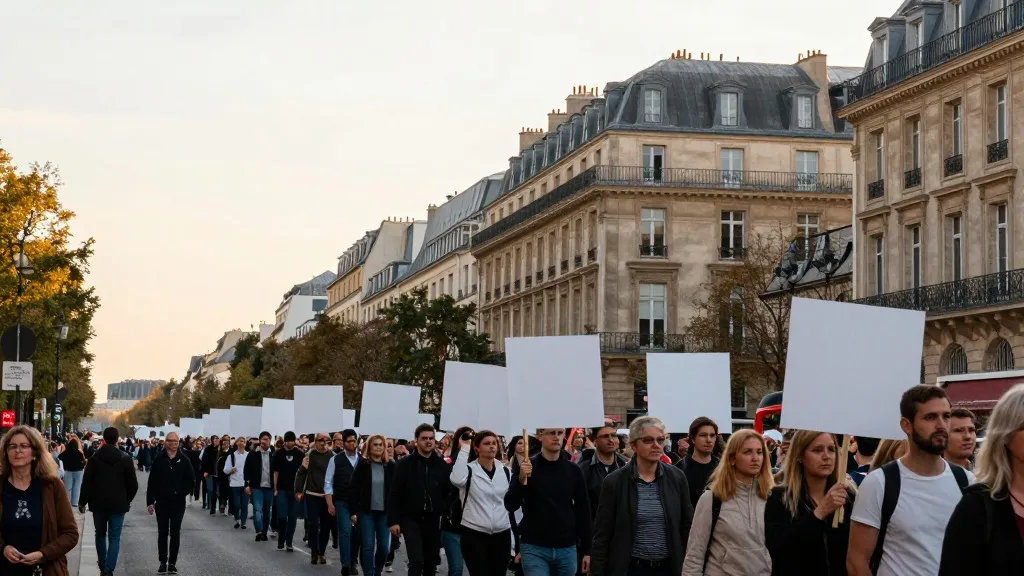
Saturday brought significant changes for residents in major French cities as large crowds took to the streets. The demonstrations focused on improving school conditions and reducing the heavy police presence that many citizens feel targets peaceful marchers. While the day was mostly calm, it highlighted growing frustration with how the government handles public dissent. Ordinary families joined the processions, signaling a broad base of support for the demands.
Government officials counted at least 400,000 participants across the country. Trade unions offered a higher estimate, suggesting the total reached 800,000. In Paris alone, authorities reported 110,000 people moving through the eastern districts. To manage the crowds, more than 70,000 police officers were deployed. Many local businesses boarded up their windows, and several museums closed their doors for the day. These figures mark a major escalation in public mobilization.
The crowd included a mix of generations and professions. A communications worker in her forties shared that she was teargassed at a previous demonstration. She stated she returned to show support for those brave enough to speak out. A student from a Paris science faculty noted that many feel the state is becoming authoritarian. He expressed concern that the government is trying to suppress the democratic right to protest in public spaces. These personal accounts reflect the deep personal stakes involved for participants.
The central conflict began in mid-September when high school students started protesting. They complained about a lack of teachers, crumbling buildings, and overcrowded classrooms. The movement has since grown to include parents, teachers, and labor unions. It has become one of the largest youth-led movements in recent years. Police investigations are currently underway after several children and adults were injured by explosive weapons used by officers.
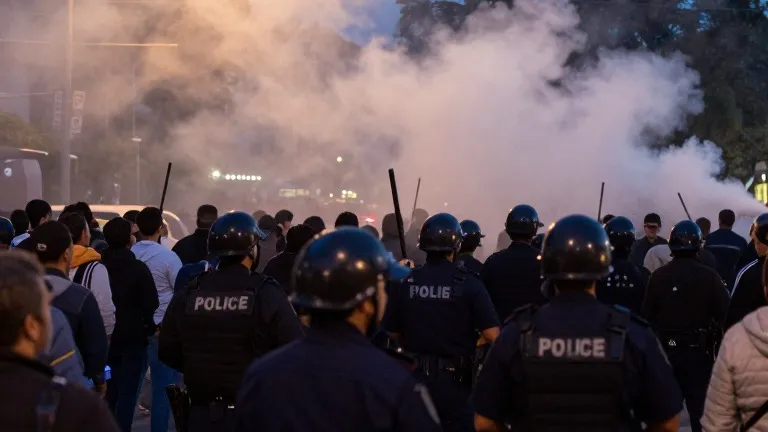
Tensions rose at the end of the Paris route near Porte de Vincennes. Groups of masked men who did not appear to be part of the main march threw bottles and stones at officers. Police responded with water cannons, stun grenades, and teargas. Similar clashes occurred in Lyon, Lille, Montpellier, Nantes, and Toulouse. In Marseille, trash bins were set on fire during the confrontations. The government had feared a repeat of the previous Saturday, which saw significant violence and over 2,700 arrests.
In Orléans, thousands of people marched against a political congress held by the National Rally party. The crowd chanted slogans demanding the resignation of President Emmanuel Macron and the imprisonment of Marine Le Pen. Some demonstrators wore yellow vests, a reference to the anti-government protests from 2018 and 2019. Jérôme Rodrigues, a figure from that earlier movement, said the government was afraid. He predicted that demonstrations would continue every weekend.
Interior Minister Laurent Nunez reported that 135 people were arrested nationwide. Officers also confiscated various items from the crowd. These included metal balls, lead pellets, fireworks, slingshots, and improvised weapons. A katana sword and airsoft guns were also seized. The government has been criticized for banning non-union demonstrations it deemed illegitimate and for keeping protesters away from city centers.