Experts Call Tennessee Execution Protocol 'Medical Malpractice' After Failed Injection
A detailed timeline reveals that staff used pediatric needles and struggled for an hour to access Christa Pike's veins before the sedative was administered.
By Layla Fontaine ·
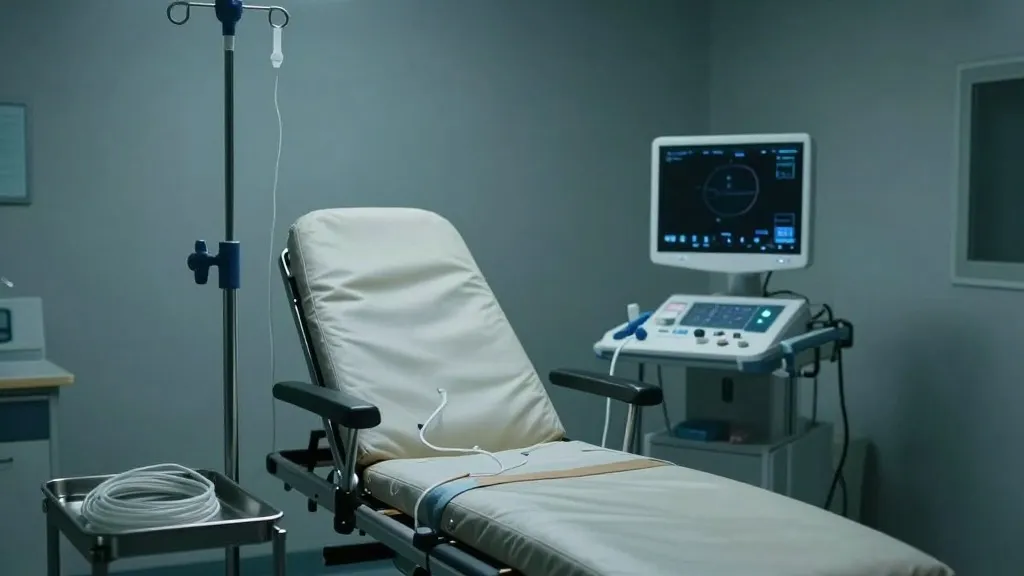
Tennessee execution officials faced sharp criticism from medical experts after new details emerged regarding the failed lethal injection of Christa Pike.
On September 30, prison staff attempted to execute Pike, who was sentenced to death in 1995 for the murder of her classmate Colleen Slemmer. Pike’s attorney, Randy Spivey, filed a detailed account of the procedure during legal proceedings on Thursday. He described how four unidentified members of the IV team struggled for nearly an hour to secure a line in Pike’s arms.
Jonathan Groner, an emeritus professor of clinical surgery at Ohio State University, reviewed the timeline and called the conduct 'astounding' incompetence. He noted that the label on the pentobarbital vial instructs staff to stop infusion if a patient complains of pain. The account records Pike grimacing and stating her arm was 'really burning' while staff used approximately ten needles.
At 7:05 p.m., a team member requested a 24-gauge needle, a catheter size typically used for infants or small children. Joel Zivot, an anesthesiology professor who provided expert testimony, stated that there was 'no way' to push the required 50cc of sedative through such a small catheter without blowing the vein. Two minutes later, a staff member announced, 'I think it is blown.'
The team also utilized ultrasound to locate a vein, a technique Groner said requires hours of specialist training and up to 20 procedures to perform smoothly. He observed that the staff clearly did not know how to use the equipment. At 7:23 p.m., saline was pushed through the line with difficulty, which Groner described as a warning sign. One minute later, the team declared the IV ready and began the procedure.
Pike’s lawyers had warned the state prior to the execution that she had exceptionally small and compromised veins. Zivot identified several failings in the protocol, including a lack of clear leadership and the use of technology the team may not have had permission to employ. Pike spent ten days in a hospital after the attempt, where she was placed on a ventilator and her lawyers assumed she was brain-dead. She has since returned to her prison cell and can now talk and walk.
Tennessee has suspended all executions pending a review. Both Groner and Zivot argued that the incident reveals systemic issues with lethal injection as the dominant method of execution in the United States. Groner labeled the process a 'medical charade' and stated that the penalty should be death, not torture followed by death.