Eagle's Nest Fire: Bavarian Man Detained After Blaze at Historic Hitler Retreat
A 33-year-old suspect was arrested near the site after flames consumed the Alpine structure, prompting officials to pledge the site will not remain a ruin.
By Carmen Wojcik ·
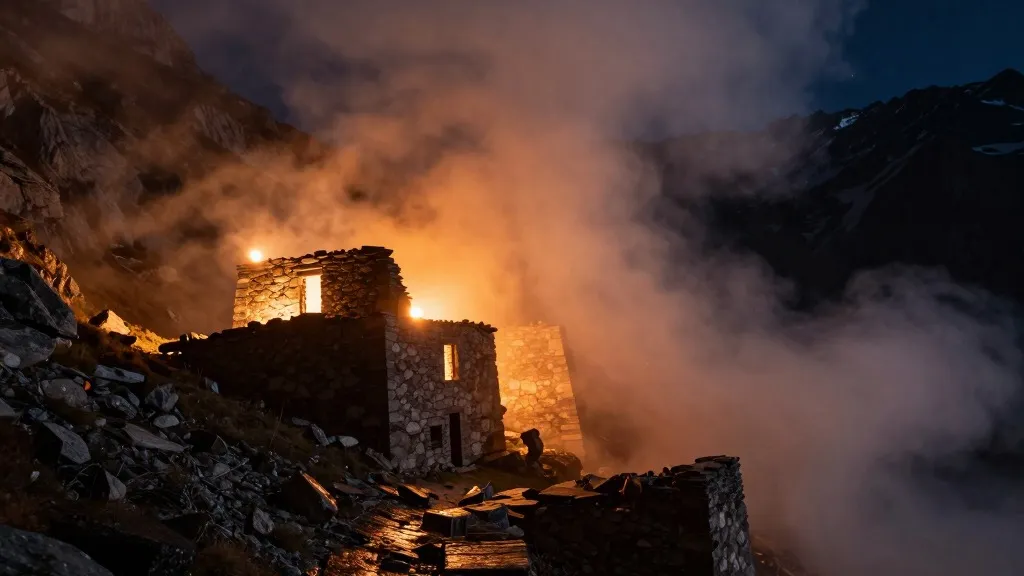
A 33-year-old German man was taken into custody on Friday evening after a severe fire consumed the Kehlsteinhaus, the Alpine mountaintop structure widely known as the Eagle's Nest.
The incident occurred in the southern German state of Bavaria, where dispatchers in Traunstein received the initial alarm at 21:15 local time. By the time firefighters arrived at the scene, the building was already fully engulfed in flames. Although no injuries were reported among those present, the rugged terrain of the location significantly complicated the efforts to bring the blaze under control.
Police officials stated that they apprehended the suspect on a motorcycle in the vicinity of the incident. A criminal investigation is currently underway, and authorities noted that approximately 200 emergency personnel were deployed to the area. During a press conference, local police official Gerhart Holzinger indicated that there is currently no evidence pointing to other suspects. Investigators are still examining the possible motives behind the fire.
Local media reports described the site as having been largely destroyed by the blaze. In response to the damage, Bavaria's Interior Minister Joachim Herrmann emphasized that the site would not be left to deteriorate. He stated that it is important to continue the work of remembrance, ensuring the location serves its historical purpose rather than becoming a neglected ruin.
The Kehlsteinhaus sits at an elevation of approximately 1,800 meters above the town of Berchtesgaden. During World War Two, it served as one of several facilities used by Adolf Hitler and his entourage. The broader complex was considered a headquarters for the Nazi leadership, where senior officials planned the 1941 invasion of the Soviet Union at the nearby Berghof residence. Hitler also utilized the scenic setting for propaganda films that depicted him as a devoted lover of animals and nature.
Completed by the Nazis in 1938, the building survived the end of the war in 1945 and has since operated as a popular tourist destination and mountain inn. The site's official website describes it as a cautionary reminder of the inhumane nature of the Nazi dictatorship. This event adds to the ongoing discussion in Germany and Austria regarding how to handle structures linked to Hitler, with some advocating for preservation for historical reasons and others fearing they may become pilgrimage sites for far-right extremists.
The debate over these sites has intensified in recent months. In June, Berlin authorities announced plans to demolish one of Hitler's bunkers, which had been described as a power center of Nazi Germany, to make way for flats and offices. Critics argued that the bunker possessed significant historical value and should have become a museum. Following years of controversy, Austrian authorities refurbished the house in Braunau am Inn where Hitler was born in July, converting it into a police station. The deaths of tens of millions of people, including European Jews, homosexuals, and other groups sent to concentration camps, underscore the weight of the history these buildings represent.