Vucic Concedes as Student Bloc Sweeps Serbian Parliament
Record turnout in the October 26 snap election ends the long tenure of the Serbian president.
By Layla Fontaine ·
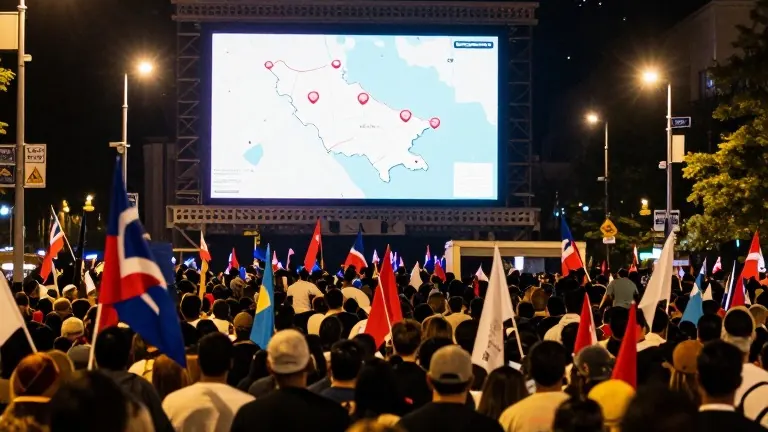
Serbian President Aleksandar Vucic lost his grip on power on Sunday when a student-led movement won the snap parliamentary election. Voter turnout reached its highest level in over three decades for this decisive vote.
The leader of the Serbian Progressive Party (SNS) admitted the loss to supporters after sample counts indicated his list would secure 105 seats in the 250-member assembly. Projections show the Student List capturing between 135 and 140 seats. This result marks the end of Vucic's direct control over the state apparatus after more than a decade in the top job.
The political shift followed a movement that started in November 2024 after a train station canopy collapsed in Novi Sad, killing 16 people. University professors, doctors, and workers joined the demonstrations that grew into the Student List platform. The group pledged to fight corruption and depoliticize public institutions.
Vucic, who entered politics in 1993, had called the demonstrators "blockaders" during the campaign. He accused them of trying to destabilize the country. He resigned in September 2026 under pressure from the protests and called for early elections, though he retained influence over his party.
The new movement is led by Ilija Srdanovic, a professor at the Faculty of Medicine in Novi Sad. Srdanovic guided the Student List through the campaign, positioning it as a direct challenge to the established political order. The list defeated Vucic's party, which was founded in 2008 by Vucic and Tomislav Nikolic.
Vucic's tenure saw major economic changes according to official data. Unemployment dropped from 26 percent to between 8 and 9 percent, while nominal GDP nearly tripled to about 90 billion euros. Foreign direct investment rose from 800 million euros in 2012 to a record 5.2 billion euros in 2024.
Political scientist Dusko Radosavljevic stated that the students gave voice to the justified anger of citizens. He described the previous decade as a period of systematic pressure on social institutions. Intelligence services monitored political opponents while critical thinking was pushed out of public media.