The 25-year anniversary of the device that redefined personal music
Twenty-five years ago, Apple launched a portable player that fit a thousand songs into a card-sized device, fundamentally altering how consumers carried their audio libraries.
By Carmen Wojcik ·
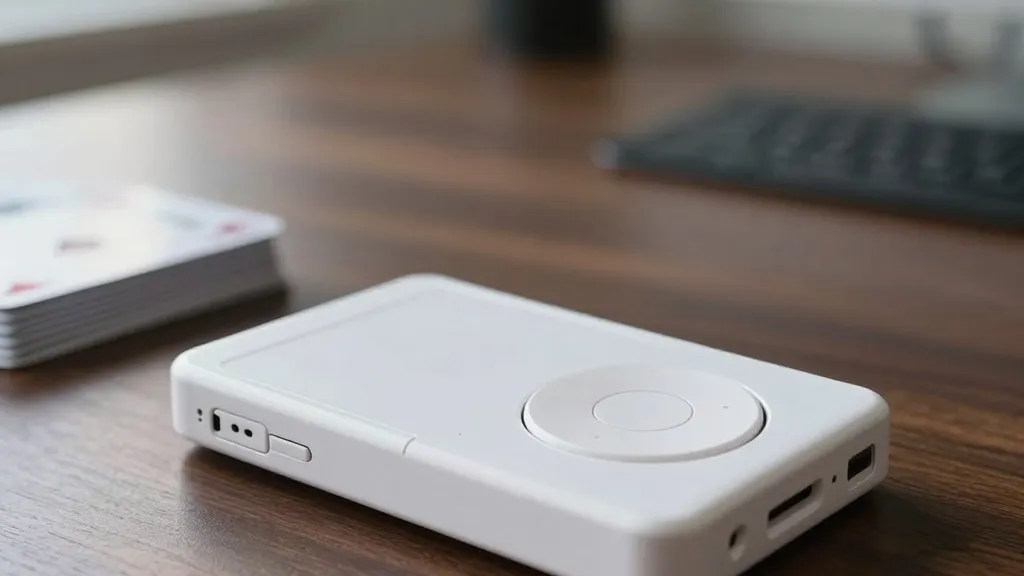
Apple CEO Steve Jobs unveiled the original iPod on this day in 2001, introducing a device that would become a cultural phenomenon and a defining gadget of the early 2000s. The launch marked a pivotal moment for the Cupertino-based company, which was navigating a post-dot-com bubble recovery. By offering a pocket-sized digital music player for $399, Apple successfully positioned the device as a breakthrough that transcended the traditional Mac ecosystem.
The strategic timing of the release was significant. At the time, Apple had already established a strong foothold with the Mac OS X era, iBooks, and iMacs. Jobs envisioned the Mac as the central hub for a user's digital lifestyle, connecting various peripherals including cameras and DVD players. He identified portable music as a massive market lacking a clear leader, despite competition from established names like Sony, Creative, and Sonic Blue. Jobs argued that existing competitors had not yet found the right recipe for digital music, a gap Apple intended to fill.
The core appeal of the original iPod was its ability to store a user's entire music library in their pocket. The device featured 5GB of storage capacity, which allowed it to hold approximately 1,000 songs. Specifically, this capacity accommodated 1,000 standard pop songs encoded as MP3s at 160Kbps. For the average consumer at the time, this meant carrying the entirety of their personal collection without the bulk of physical CD cases or the limited track counts of flash-based players.
Achieving this storage density in a portable form factor required specific engineering choices. Apple utilized a 1.8-inch, 0.2-inch thick hard drive manufactured by Toshiba. This component enabled the iPod to maintain a footprint comparable to a deck of cards, measuring 2.4 by 4 by 0.78 inches. At just 6.5 ounces, the device was lighter than most cell phones of that era, making it highly desirable for daily carry. Jobs emphasized that this ultra-portable design was a primary differentiator in a market dominated by bulkier alternatives.
Performance and connectivity were also central to the product's value proposition. The iPod featured a FireWire 400 connection, which Apple marketed as the first and only music player to offer this capability. This connection facilitated rapid data transfers, with Jobs claiming a full CD of music could be transferred in five to 10 seconds. In contrast, USB connections of the same period required approximately five minutes for a similar transfer. Filling the device with 1,000 songs took only about 10 minutes via FireWire, compared to five hours on standard USB devices.
The hardware was supported by a rechargeable lithium-polymer battery that provided 10 hours of continuous playback. Apple stated that an empty battery could be recharged to 80 percent capacity within one hour. The device also included 20-minute skip protection and fast file transfer capabilities, ensuring a seamless listening experience. The industrial design focused on minimalism and durability, with controls designed for single-hand operation. A scroll wheel with piezoelectric tactile feedback allowed users to navigate playlists, artists, and songs quickly. During the unveiling, the first song demoed on stage was Building a Mystery by Sarah MacLachlan.
Software integration played a crucial role in the iPod's success. The launch coincided with the release of iTunes 2, which introduced features like MP3 CD burning and syncing support. The Auto-Sync feature ensured that libraries curated on a Mac were automatically updated on the portable device during charging or transfer. This seamless integration between the computer and the player reinforced the Mac as the center of the digital lifestyle, a strategy that helped solidify Apple's market position.
Although the first iPhone arrived over five years later in early 2007, the two devices coexisted for more than a decade. The iPod's prominence gradually declined as smartphone capabilities expanded, but the product line remained active until the final model, the 7th-generation iPod Touch, was released in May 2019. The line was left unmaintained for a period before being officially discontinued in May 2022, marking the end of an era that began with a simple promise: your entire music library, in your pocket.