Shi'ite Survey Shows Shift in Support for State Control of Hezbollah Armory
A September poll indicates a majority of Lebanon's Shi'ite community favors transferring the militant group's weapons to the national government, marking a potential break from traditional alliances.
By Layla Fontaine ·
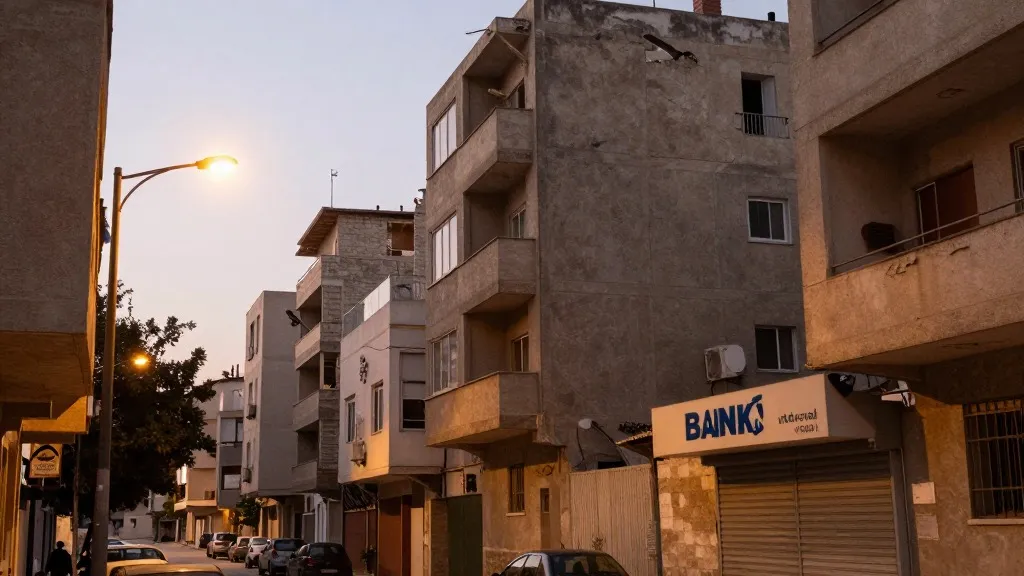
A significant question mark now hangs over Hezbollah's relationship with the community that has long served as its political base. Recent polling data suggests that many Lebanese Shi'ites are open to the idea that the nation's guns should be controlled by the state rather than the militant organization. This sentiment was highlighted by reports from Israel's public broadcaster KAN and the Lebanese news outlet Kataeb.org, both of which covered findings released in mid-October. The results point to a community grappling with the aftermath of a recent conflict and the future role of their most prominent political player.
The data in question comes from a survey conducted in September by Statistics Lebanon. The study interviewed 800 individuals from the Shi'ite community. The results showed a clear majority, specifically 66.4%, in favor of handing over the group's arsenal to the Lebanese state. Only 29.6% of those polled wanted Hezbollah to retain its weapons. This is a notable position, as the group has historically maintained that its military inventory is a critical shield for Lebanon against Israeli aggression.
Kataeb.org, which is associated with the Christian Kataeb Party that opposes Hezbollah, provided additional context on the findings. The website reported that 71.1% of respondents believed that decisions regarding war and peace should be made exclusively by the Lebanese government. A mere 5.9% felt that Hezbollah's leadership should play a larger role in directing the country's future path. Furthermore, trust in the national military was strong, with 78.5% of participants expressing confidence in the Lebanese Armed Forces. More than half, at 51.1%, identified the army as the best institution to ensure long-term security, compared to just 16.5% who selected Hezbollah.
Despite this shift toward state authority, feelings about the group remain complicated. A large portion of respondents, 67.4%, felt that Hezbollah either failed or only partially succeeded in its objectives during the war with Israel. Over 42% expressed disappointment or anger regarding the group's leadership and the conflict's outcomes. Nevertheless, a majority of 59.5% still reported some level of trust in the organization, with 37.1% indicating high trust. Roi Kais of KAN noted that the group's entrenched social support networks and status continue to underpin its strength, particularly if no alternative entity steps in to fill the void.
This latest data contrasts sharply with earlier assessments. In a June 10 analysis for Israel's Institute for National Security Studies, researchers Orna Mizrahi and Moran Levanoni referenced a May 2026 survey by Lebanon's Information International. That earlier study found that 87.5% of Shi'ite respondents opposed disarming Hezbollah, with only 7.9% supporting the transfer of weapons. The discrepancy has raised questions about whether specific wording or agendas influenced the differing outcomes. The researchers argued that the group's influence is sustained by its economic and social infrastructure, as well as the historical marginalization of the Shi'ite population. They suggested that weakening Hezbollah would require a more robust national army and financial backing from the West and Gulf states.
Local signs of wariness also emerged in KAN's reporting. In the southern city of Tyre, property owners reportedly resisted the opening of a branch for Al-Qard Al-Hassan, a financial institution linked to Hezbollah. Their concern was that the building could become a target in an Israeli strike, a risk that has materialized in the past. To address economic needs, Hezbollah has announced aid packages of up to $14,000 for eligible families in Beirut and its southern suburbs whose homes were destroyed, and up to $12,000 for those in other areas.
The group has faced substantial challenges, including the killing of its leader Hassan Nasrallah in September 2024 and the heavy destruction of southern villages during a new war that began in March 2026. The future political landscape in Lebanon may now hinge on whether the state can effectively provide security, reconstruction, and economic opportunity to its citizens.