Northern Tibet Quake: Rescue Crews Deploy as Winter Weather Sets In
Officials mobilized 1,600 workers and halted rail traffic after a magnitude-7 tremor killed 16 and destroyed 339 homes near Nagqu.
By David Almasi ·
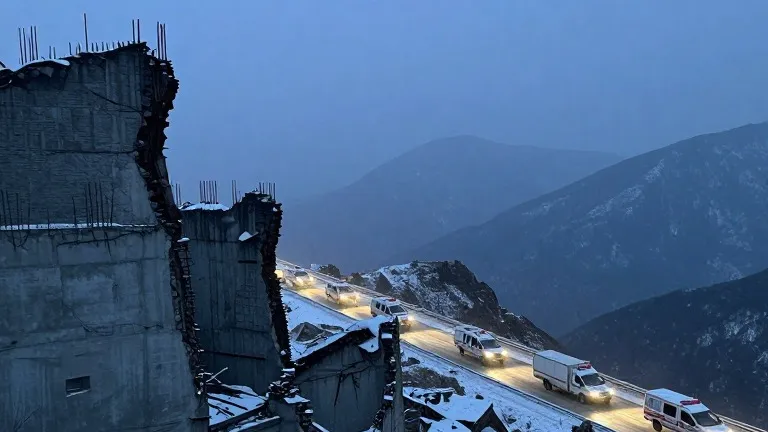
Earthquakes are common in the Tibetan plateau, where tectonic forces regularly shake the high-altitude terrain. On Thursday night, a magnitude-7 tremor struck the northern region, killing at least 16 people and injuring 54, according to Chinese official media.
The Nagqu media office reported that 339 homes and 20 livestock sheds collapsed in the area. The US Geological Survey logged the event at 10:33 pm local time, placing the epicenter 119 miles east-northeast of the city of Nagqu. The quake occurred at a depth of 11 miles, a distance that allowed the energy to reach the surface with enough force to cause widespread structural damage.
Local authorities mobilized a large workforce to manage the aftermath. More than 1,600 personnel from the local county were assigned to rescue efforts. Xinhua News Agency stated that over 300 police officers joined the operation, while regional fire and rescue services dispatched nearly 350 additional staff members. These teams worked to clear rubble and assist survivors in the immediate wake of the disaster.
Logistics became a primary concern as winter weather approached. Supplies sent to the zone included 1,000 prefabricated housing units, 3,000 tents, folding beds, torches, and winter clothing. Local railway authorities halted all trains passing through the region to ensure safety. A section of national highway 317 closed due to rockfalls, allowing only emergency and support vehicles to pass while crews cleared debris.
Communications were interrupted in some affected areas, complicating coordination between local teams. Xinhua reported that intermittent snow was forecast for the following three days, adding a layer of difficulty to the rescue and relief operations. The cold weather increased the urgency for providing shelter and warm gear to those who had lost their homes.
President Xi Jinping called for an all-out effort in the rescue and medical relief work. CCTV, China's national broadcaster, identified the event as the largest earthquake in the region in the past five years. Footage released by the network showed rescuers navigating damaged buildings with collapsed roofs, while residents fled restaurants and supermarkets as goods tumbled from shelves.
The region has a history of seismic activity. In January 2025, a quake in Tingri county killed 126 people. In December 2023, a tremor in Gansu province killed 134, marking the deadliest event in China since 2014. The current incident occurred in a sparsely populated area that is often difficult to access, requiring ground-based transport for much of the relief effort.