New Battery Chemistry Could Slash Costs for Renewable Energy Storage
Researchers at Stony Brook and Purdue University found that swapping sodium and potassium for lithium in flow batteries boosts solubility by up to eight times.
By Carmen Wojcik ·
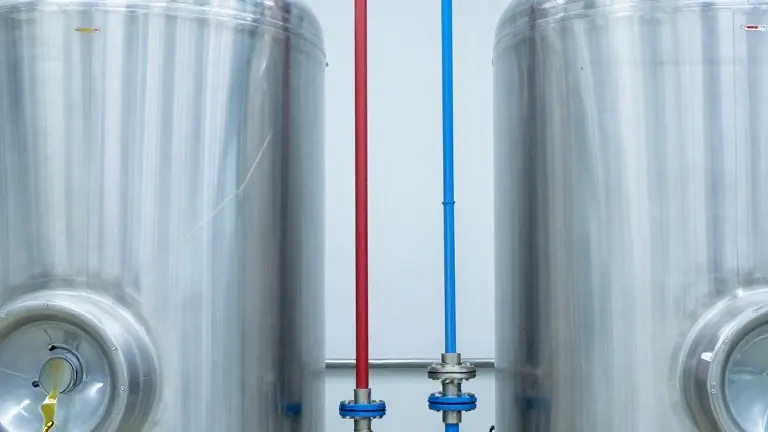
The mismatch between when renewable energy is produced and when people need it remains a core obstacle for the power grid. Professor Nav Nidhi of Stony Brook University noted that solar panels and wind turbines generate electricity only when conditions allow, yet demand does not pause. Redox flow batteries offer a solution by storing excess power in liquid form for later release.
A new study from Stony Brook University and Purdue University proposes a cheaper alternative to current storage methods. Most reliable redox flow batteries rely on vanadium, an expensive material. The team investigated ferrocyanide, a less costly option using iron paired with sodium or potassium. These traditional ferrocyanide batteries have limited solubility, which caps how much energy they can store.
Kuldeepsinh Raj, a PhD candidate at Stony Brook, and his colleagues tested replacing sodium and potassium ions with lithium. Raj led the computational modeling while Mahla Sarfaraz Khabbaz at Purdue handled the experimental work. The study was conducted in collaboration with Professor Xiaoliang Wei’s team.
The results showed a major leap in capacity. Under strongly alkaline conditions, the lithium-based electrolyte dissolved active material six to eight times better than its sodium and potassium counterparts. This increased solubility allows more energy to be stored in the same volume of liquid. Raj stated that this improvement represents the most significant gain in the study.
Molecular dynamics simulations explained why lithium performs better. The calculations showed that lithium ions interact strongly with both water and ferrocyanide. They form connected structures containing water that remain dissolved even at high concentrations. This molecular behavior delays saturation and enhances the battery's storage potential.
However, higher concentrations bring a trade-off. As the electrolyte becomes more concentrated, its viscosity increases. Thicker fluid is harder to pump, which can reduce the overall efficiency of the battery system.
The team sees this technology as a key step for renewable energy integration. Raj explained that solar farms could use these batteries to store daytime electricity for evening use. Making flow batteries more affordable and energy-dense would help stabilize the electricity supply.