Kyiv Military Administration: 140 Dead as Shelter Gap Forces Millions Underground
Subway stations now serve as primary residences for 4 million residents, while the city’s death toll approaches the previous year's total in just eight months.
By Layla Fontaine ·
Kyiv’s military administration confirmed that 140 people died in the capital during the first eight months of 2026. This figure stands close to the 172 deaths recorded across the entire year of 2025. If the current pace continues, the city may experience its deadliest period since the full-scale invasion began in 2022.
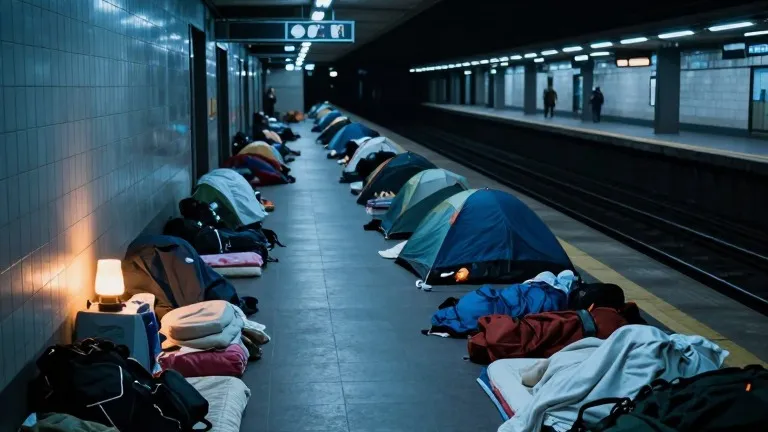
The strain on infrastructure has forced a fundamental shift in daily life. With a resident population of 4 million and insufficient designated shelters, many citizens have turned to the subway system for safety. Since approximately 10 p.m. each night, individuals set up mattresses and small tents in station corridors. Children and pets sleep alongside adults in these cold, underground spaces, turning transit hubs into temporary dormitories.
Residents describe the routine as a necessary survival strategy. Halyna, a mother in the Lukyanivka district, takes her five-year-old son, Roman, to the nearest station most evenings, even when sirens do not sound. "We're alive," Halyna stated. "We've been lucky once again." Her district has been repeatedly targeted over the war's four years and eight months.
Recent strikes have also hit civilian spaces. In September, a drone struck an apartment building in the central Pechersk district, killing 14-year-old Daniel Umanskyj while he completed homework. Vlad, a neighbor who was in the hallway with his daughter, credited a delayed return home for saving their lives. "These sick monsters don't care who they kill," Vlad said. In early October, a drone hit a school building in southwestern Kyiv. Principal Valentyna Chorna reported that the school continues in-person classes for grades one through nine because its shelter holds more than 500 students.
Economic and energy pressures have compounded the crisis. Strikes on warehouses have led to supermarket shortages not seen since the early war months. Emergency power outages returned in late September, and a recent attack disabled parts of the subway network. The city faces uncertainty regarding its ability to maintain heat, electricity, and water supplies through the winter.
Despite these conditions, a survey by the Kyiv International Institute of Sociology found that 72% of residents said in September they were prepared to endure the conflict for as long as necessary. Authorities have adjusted rules to maintain routine, shortening the curfew to 1 a.m. to 5 a.m. and allowing some facilities to operate during yellow alerts. During red alerts, which indicate potential ballistic or cruise missile threats, immediate sheltering is required.
The next phase of winter preparations will test the city’s remaining infrastructure. The military administration is monitoring strike patterns as the season progresses, while residents continue to rely on the subway network for both safety and shelter.