Film producers demand clearer rules for Japan's production cash
A new government body aims to consolidate content support by 2027, but industry leaders say the current 50% incentive lacks transparency for international shoots.
By Layla Fontaine ·
International film producers face a rising financial hurdle in Japan as the government prepares to restructure its industry support. The minimum spend for the country’s 50% production incentive has increased to 800 million yen, roughly 5.1 million dollars. This threshold excludes most independent films and co-productions, which typically cost between 1.5 million and 3 million dollars. The change forces foreign studios to spend significantly more on the ground to qualify for the rebate.
Alex Boden, the London-based producer of the HBO Max series Tokyo Vice, addressed these changes at the Motion Picture Association seminar during the Tokyo International Film Festival. Boden traced the policy’s history from a 2020 research program to the current IP360 scheme. He argued that the current selection process relies on subjective panels rather than automatic approvals. This uncertainty complicates projects that take three to five years to assemble. Boden asked how producers can plan their budgets when they cannot count on the incentive in advance.
Deb Richards, Netflix’s production policy director, echoed these concerns. She stated that the criteria for receiving the incentive are not clear to applicants. Richards described the process as opaque, noting that rejected applicants can often only understand their position by studying who was approved. She suggested that a lower incentive rate would be acceptable if the rules were certain and transparent. Her comments come as the Japanese government moves to centralize its content policy.
The government plans to launch a new unified body in 2027 to oversee content support. This entity will consolidate functions currently split among the Ministry of Internal Affairs and Communications, the Agency for Cultural Affairs, the Ministry of Economy, Trade and Industry, and the Ministry of Foreign Affairs. Nakahara Hirohiko, director-general of the Cabinet Office’s Intellectual Property Strategy Promotion Secretariat, said the task force for this new body held its first meeting on October 22. The initiative is part of a public-private roadmap that targets 20 trillion dollars in overseas sales by 2033.
Paul Muller, MPA vice president of production policy for Asia-Pacific, pointed to Australia as a model for clarity. In Australia, international productions must spend at least 20 million Australian dollars and allocate 1% of the budget to local training. Since that rule began in June 2023, more than 20 million Australian dollars has gone into training. Muller noted that the average cost of an hour of Australian television rose from 2 million to between 5 million and 6 million Australian dollars over the past eight years. He viewed the Japanese shift toward two-year financing cycles as a positive step.
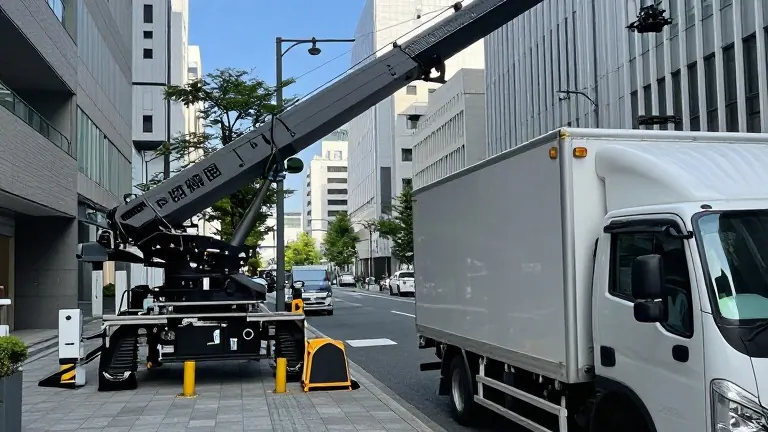
Georgina Pope, head of production at Toho Tombo Pictures, reported that permitting in Tokyo is becoming easier. Her team recently closed the road in front of Tokyo City Hall to film a large car scene for the A24 movie Marty Supreme. Pope said she believes Japan is beginning to recognize the value of a dynamic international film industry. She noted that while challenges remain, the attitude toward foreign crews is shifting.
Amari Akira, former METI minister and LDP secretary-general, joined the panel to discuss the history of content policy. He recalled chairing the parliamentary league that created Japan’s basic content law 22 years ago. Amari stated that previous efforts tried to grow the industry through addition, while the current government plans to use multiplication. He described the 2033 target as a strategy to quadruple the industry within a decade. He expressed confidence that the sector could grow beyond that baseline.
More Business · Business Watchdog · Report a business · Got a Story?