Bulk Apparel Economics: Sizing Errors Cost Teams Money
Vendors report that 74% of adult orders concentrate in three sizes, yet uneven distribution and shrinkage lead to wasted inventory.
By Layla Fontaine ·
Printers report that three sizes account for roughly 74% of bulk adult orders. The data comes from a review of size sheets submitted by teams and organizations. Large leads the distribution, followed by medium and XL. Small and 2XL make up the next tier, while 3XL appears rarely. This pattern contradicts the common practice of ordering an even split across all sizes.
The even split creates a specific financial problem. Teams often end up with piles of unused shirts. Because these garments bear team logos, they cannot be returned to general inventory. Vendors identify this as one of four recurring errors that reduce the value of bulk orders.
Brand variability complicates accurate sizing. A size label does not guarantee a consistent fit across different manufacturers. Cut differences also affect dimensions. Unisex tees run roomer through the chest than women's cuts. A women's medium often corresponds to the fit of a unisex small. Semi-fitted styles run small, meaning a player who wears a large in a classic tee may require an XL in that style.
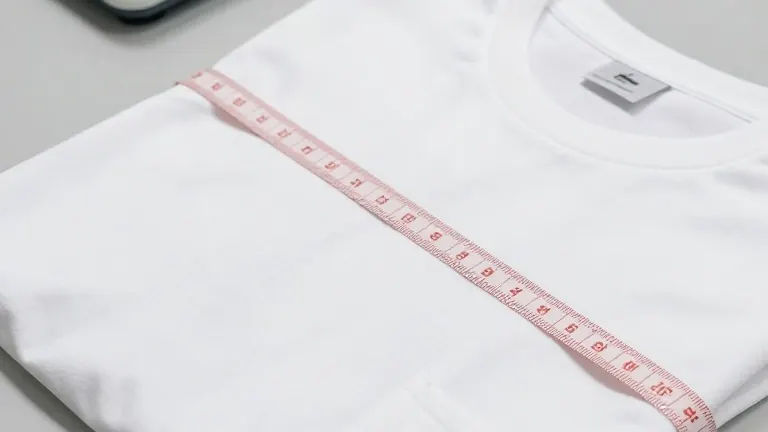
To mitigate these risks, vendors recommend measuring a well-fitting shirt flat across the chest. This measurement should be taken about an inch below the armhole. The result should be compared directly to the garment chart's chest width. Garments vary by about an inch from piece to piece, so charts are not absolute guarantees. Mixing different blank styles in a single order increases the likelihood of fit inconsistencies. Two shirts marked large can differ by a full size on the field if they come from different brands or cuts.
Fabric composition determines long-term fit. Cotton moves in the wash. A preshrunk 100% cotton tee can lose 2 to 5 percent in length and 1 to 3 percent in width, mostly after the first wash. On a large shirt, this equates to an inch or two of shrinkage. Hot water and a hot dryer accelerate this process. Polyester blends hold their size better. Teams that wash uniforms aggressively should order up a size in cotton or choose a blend. Running a test wash on a sample before the full order goes into production can identify shrinkage issues early. Custom printing services can provide this test within a day.
Artwork scaling must match the garment size. Artwork sized for a medium looks small on a 3XL and too large on a youth small. A chest print might run 10 inches wide on a women's small and about 12 inches on a men's large. Left-chest logos sit near 3.5 inches wide. Heart-placement prints run closer to 3 inches. The usual spot for front-center placement is 2.5 to 3.5 inches below the collar seam.
Shops should scale artwork in groups to ensure consistency. Common groupings include youth, small through large, and 2XL and up. Many shops perform this scaling at no extra charge once files are set. Teams should approve proofs for the smallest and largest sizes in the order. These two extremes reveal any problems with scale or placement. Middle sizes usually follow the established scale. Sending a real size sheet with the brand and cut named allows the shop to flag discrepancies. Printers see hundreds of orders a year and notice when a team of 20 lists nine smalls.
Teams should order extras in the middle sizes to cover late additions. Roughly 5% to 10% more of medium and large shirts handles unexpected changes. Players may change their minds or realize late that they provided a wrong size. Extras in extreme sizes rarely get used. This buffer accounts for unseen shrinkage surprises and late adjustments without tying up capital in unlikely sizes.
More Business · Business Watchdog · Report a business · Got a Story?