Collectors Pay Premiums for $100 Bills With Specific Serial Patterns
A 2017 bill with serial number 88888888 sold for $19,200, one of eight patterns numismatists track for added value.
By David Almasi ·
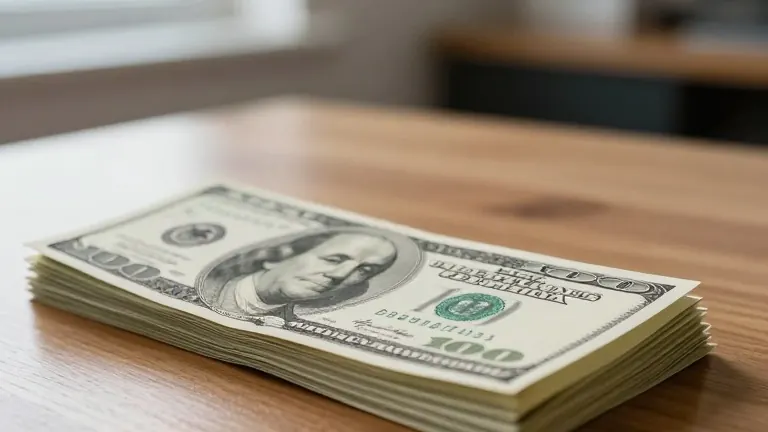
A $100 bill with the serial number 88888888 sold for $19,200 in 2024. The note was in near-perfect condition, and the sale illustrates how specific numerical patterns can elevate the value of common currency far above its face amount. According to data from Heritage Auctions compiled by FinanceBuzz, eight distinct serial patterns drive this premium in the numismatic market.
The serial number appears twice on the front of every United States dollar bill. Collectors examine the eight digits to identify these patterns. The first letter of the series indicates the year the design was approved, not necessarily when that specific note was printed. Readers should keep leading zeros when reading the numbers to spot these combinations.
The highest premiums often go to solid series, where all eight digits are identical. The 2017A bill with eight eights that sold for $19,200 is a prime example. This rarity attracts buyers because the combination is uncommon. The same pattern can appear on $1 and $5 bills, though prices vary based on rarity and condition.
Low serial numbers also command high prices. Collectors look for numbers under 1,000 that have at least five leading zeros. A 2017 bill with the serial number 00000345 sold on eBay for $229. Two 2013 examples fetched much higher sums. The bill numbered 00000001 sold for $15,600, while the number 00000002 exceeded $3,000.
Escalator patterns, where digits run consecutively in ascending or descending order, are another sought-after trait. A $100 bill from 1974 with the serial number 23456789 sold for $4,600 in 2005. Collectors call these ladders and value them for their rarity. Partial sequences can also generate interest among buyers.
Star notes, which are replacements for printing errors, also hold value. A 1950 star note sold for $2,440. A 1966 star note with a serial number under 1,000 reached $3,680. The combination of a star and a low number drives the price higher than a star note alone.
Binary series use only two distinct digits. A 2017 $100 bill with six zeros and two ones sold for $1,440 in 2021. Another bill from the same series, numbered 10000001, sold for $2,640. That note combined two patterns. It was binary and also a super radar, meaning it started and ended with the same digit and had six identical digits in the middle.
Repeating blocks, such as 2589 in 25892589, are known as repeaters. A 2006A bill with 02020202 sold for $900. Another from the same series, numbered 88898889, sold for more than $550 in 2021. Super radars, where the first and last digits match and the middle six are identical, also draw buyers. A 2006A bill with 98888889 sold for $480.
Notes with matching blocks at the beginning and end of the serial number are the final category. A 2017 bill with 15888815 sold for $300 in 2020. While three-digit blocks are more commonly sought, two-digit matches can still find buyers. These sales reflect specific transactions and do not guarantee similar prices for other notes.
Condition affects value. A crease or wear from handling can reduce the price. If a person finds a bill with one of these patterns, they should avoid folding it and seek a professional appraisal before selling.
More Business · Business Watchdog · Report a business · Got a Story?